Humanitarianism is a broad field that has developed considerably since the 1990s. Accompanying this growth has been a proliferation of researchers seeking to understand and improve humanitarian practices.
The K4DD Humanitarian Evidence and Discourse Summary is a monthly evidence digest sharing the latest humanitarian outputs. They’ve been running since 2020 and feature emerging research and opinion as it is published. They are designed to bring the latest resources directly to humanitarian workers, particularly in these turbulent times. Here’s why evidence summaries like these are needed.

Why is humanitarian evidence needed more than ever?
Even before the recent cuts in government aid, humanitarian actors confronted immense problems. Protracted crises, violent armed actors operating with impunity, a growing number of natural disasters stemming from climate change, violence against refugees and the development of new weapons, are some of the challenges facing the humanitarian sector and beyond.
For several decades, the humanitarian sector has sought to ‘professionalise’ itself. The creation of standards, platforms for sharing best practice, coordination mechanisms, and a culture of research and evidence use, have all contributed to this effort. The sector has also expanded to include new topics and domains of action.
Humanitarian thinking is thriving in many forms. Universities (including the Humanitarian and Conflict Response Institute at the University of Manchester), humanitarian think tanks and organisations, as well as the United Nations (UN), produce regular evidence and discussion. The outputs are rich and varied, covering a range of intersecting and pressing topics which include health, shelter and water, humanitarian diplomacy, civilian protection, anticipatory action, systemic reform and new ways of working.
Seeking to help improve a sector that works in complex, dangerous and uncertain situations, this evidence has contributed to the analysis and improvement of numerous activities, the discovery of new problems, and different ways of thinking about aid.
Keeping up with evidence
The expansion of evidence is certainly a good thing, but the sheer volume of new blogs, papers, databases and more can be hard to keep up with! Especially in such turbulent times.
K4DD’s Humanitarian Evidence and Discourse Summaries are not a review of the evidence on a particular problem, as with K4DD’s Rapid Evidence Reviews that focus on answering a specific thematic question. Instead, the Summaries collate the recent evidence on humanitarianism more broadly, using FCDO’s themes of ‘protect, prioritise and prevent’. Each month, we search for newly published evidence that fits into these broad categories. We then ask a guest editor, either a humanitarian practitioner or researcher, to choose five ‘top reads’ from the list, to highlight evidence they find particularly interesting, or draw out emerging topics and themes in the discourse.
Although we split the publications into evidence, discourse and guidelines, there is no simple way to divide the publications we spotlight, as they are varied in topic and methodology. Publications that are more systematic and based on empirical studies tend to be categorised as evidence. Resources that provide commentary or insights on humanitarian problems are designated as discourse. And publications that disseminate best practices for a particular sub-field of humanitarianism tend to be classified as guidelines.
We hope that people working in the humanitarian sector find the Humanitarian Evidence and Discourse Summaries useful, to:
- bring together a large body of publications in place for easy finding
- assist with the cross-fertilisation of ideas and approaches across ‘siloes’
- introduce readers to a range of topics, disciplines and perspectives
- prompt readers to take a broader view and engage with critical perspectives that they might not otherwise have come across.
It is important to integrate longer and more tailored forms of learning. To this end, K4DD also published a humanitarian resource guide and resource pack signposting a number of online courses and resources for humanitarian practitioners.
Humanitarian aid seeks to address difficult, intractable problems, without straightforward solutions. Nevertheless, the sector has seen progress in understanding on many fronts: from refining famine early warning, to growing evidence on the effectiveness and effects of cash aid, to the importance of intersectional analysis of needs and vulnerability to crisis, the sector has learnt. It is therefore hugely important to be able to collate and disseminate this information. In turbulent times it is more important than ever that actions are supported by considered, evidence-based thinking.
You can find the latest edition of our Humanitarian Evidence and Discourse Summary here.
Increasing the supply of affordable housing in Nigeria is a government priority. Affordable housing refers to housing that can be owned by income groups categorised as below middle income. There are many barriers to the provision of affordable housing and over the years, Nigeria’s housing policy has evolved through numerous iterations to address the demand for affordable housing. Priorities for providing affordable housing and obstacles to addressing gaps in the housing market are examined in our report Priorities for Affordable Housing in Nigeria.

Nigeria’s demand for affordable housing
The demand for affordable housing has been increasing as the government’s public housing programme has been failing to reach its targets. From 2020 to 2023 the goal was to build 20,000 housing units annually. However, only 24% of this target was achieved. With the combined efforts of the public and private sector, only around 70,000 housing units are built annually. This is far short of the target of 700,000 that need to be built to address the housing gap. Deficiencies in housing supply have led to the mushrooming of informal settlements and slum areas, with over 49% of the country’s population living informally.
Barriers to affordable housing and delivery
There are a number of factors that affect the construction of affordable housing. These include: the high cost of building materials; the high costs of accessing land as well as the preparation of sites and services; the shortage of mortgage options in the market for low-income earners as well as revenue and budget limitations that have hindered the completion of projects. Other barriers include: a technical skills shortage in the construction sector (including a lack of skills and training in the use of sustainable low-cost housing technologies) the capacity of government to monitor the implementation of housing programmes; political risk resulting from a lack of continuity between government policies following changes to administrations after elections; complicated local government regulations and cumbersome bureaucratic processes; onerous land registration processes; security of tenure and poor enforcement of property rights.
Government measures to deal with the gap in affordable housing
Various measures are being implemented to address barriers to affordable housing. These include: the establishment of a National Housing Data Centre by the Federal Ministry of Housing and Urban Development (FMHUD); reforms to land registration processes in some states; the establishing of building manufacturing hubs as focal points for skills development in conjunction with the private sector ; specific measures to promote affordable housing such as reforming the Federal Housing Authority (FHA) and the Federal Mortgage Bank of Nigeria (FMBN) so that they are in alignment with an overarching housing agenda, Renewed Hope Agenda which is a blueprint for affordable housing; expanding the Urban Renewal and Slum Upgrading Programme and; streamlining administrative processes to reduce housing costs.
Additional measures recommended by experts
Besides the measures already being implemented, some additional key policies are advocated by experts to increase the affordable housing:
- Public-private partnerships where the private sector collaborates with government to develop housing schemes, to reduce costs and implement new innovations
- Site and service schemes where homeowners actively participate in the construction of their own houses at an affordable cost
- Cooperative housing schemes that entail the combining of resources into cooperatives to develop housing for members.
- Reviewing the Land Act to increase security of tenure for private property developers
- Making housing more affordable to lower income earners through reducing interest rates and creating a secondary mortgage market with loner-term repayment conditions
- The creation of a national credit database to reduce the time taken to evaluate home loan applications
- Government funded infrastructural development through the provision of basic services, water reticulation and roads
- Enforcement of town planning regulations to ensure existing housing infrastructure does not deteriorate and good quality housing is developed
- Addressing corruption in property development. This includes approval processes for property development; inflated contracts and the appointment of incompetent contractors overlooking capable ones
Use of new technologies to promote affordability and sustainable housing
The use of new technologies to reduce costs and promote sustainability are being considered and in some cases applied in housing schemes. These include:
- The use of Dry Construction techniques using recast panels. This encourages energy efficiency and provides thermal insulation
- Interlocking stabilised bricks from local materials. The use of local materials and cement-stabilised bricks is already being applied and has resulted in large cost savings
- Light Gauge Steel (LGS) entails the use of cold-formed steel frames for low-rise buildings. This reduces the need for timber, concrete and masonry and minimizes waste and emissions
- Fibre Cement Technology (FCT) is reinforced fibre cement boards for roofing and walls. This technology is resistant to fires and termites as well as rot. It also limits the use of asbestos which is a health risk
- Compressed Earth Blocks (CEB) entails the use of compact blocks from stabilised earth. This approach uses less lime and cement and is cheaper and more energy efficient than conventional blocks
Action towards affordable housing
It is clear that some steps have been taken to address the critical housing backlog of affordable housing in Nigeria. However, these measures are not sufficient on their own to reduce the housing gap. Good policies need sustained implementation between elected governments.
A holistic approach is required to address all the obstacles to affordable housing. This includes regulatory reforms; an inclusive approach such as ongoing work with the private sector to increase housing delivery and improve mortgage options that target lower income households; sustained urban renewal programmes, development of site and service schemes and the adoption of lower cost, sustainable new housing construction technologies.
Evidence suggests that the world is becoming increasingly volatile in the face of complex and interconnected challenges. It is also clear that we are failing to achieve key climate and development goals. More optimistically, other signals suggest that collective action still has the power to shape a more resilient and inclusive future.
Towards the end of last year, I reviewed some of these forecasts in global politics and sustainable development, exploring the outlook for international development from 2025 to 2035. Here’s what I found in the report, ‘Global Trends and Scenarios to 2035’.
What forecasts say about the short-term
Analysts expect the global economy to hold steady in 2025 although various near-term risks make the outlook uncertain. These include persistently high interest rates, the re-alignment of trading relationships around national security priorities, and the prospect of significant swings in trade and economic policy under the new US administration.
Over the past few years, there has been a ‘historic reversal in development’ according to a report by the World Bank, which finds that income inequality between the 75 poorest economies and the rest of the world is widening. Progress to reduce extreme poverty has stalled. Meanwhile, the Sustainable Development Goals move ever further out of reach.
What we should be looking out for up to 2035
Three important trends dominate development forecasts for the upcoming decade:
- Demographic transition. Some societies, for example in Europe and parts of East Asia, are ageing and their labour forces shrinking. Others, particularly in Africa and South Asia, have a younger and growing demographic that will expand the numbers of both workers and consumers. Both scenarios create challenges for societies and political systems in managing the economic and social consequences of demographic change.
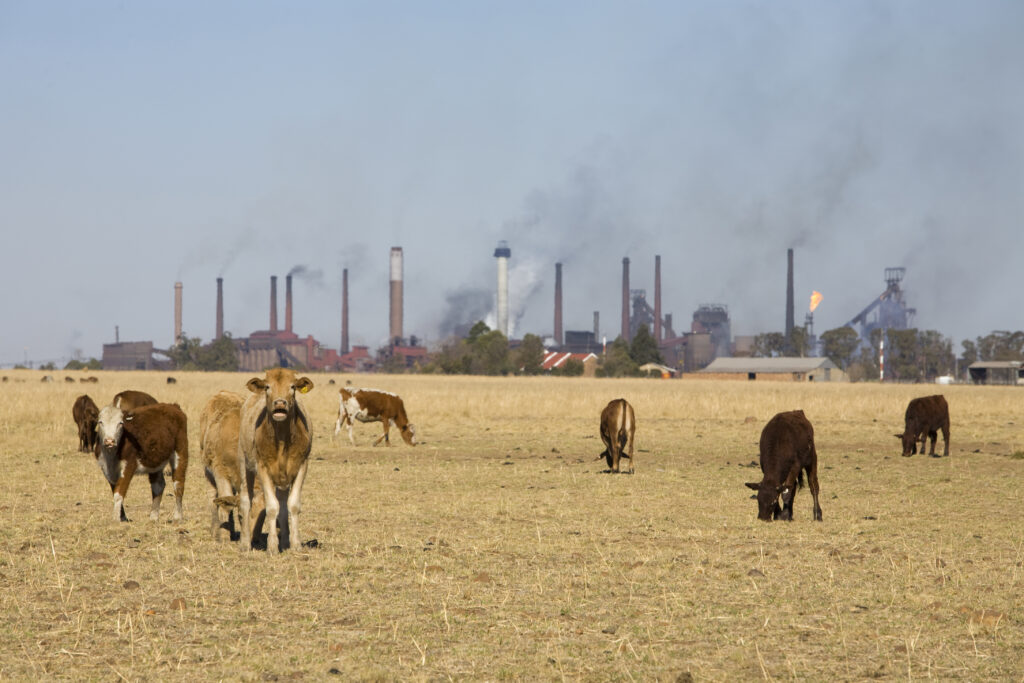
- Changes to earth systems. Climate change, biodiversity loss, and pollution constitute a ‘triple planetary crisis’ that may drive an additional 132 million people into extreme poverty by 2030. If current levels of consumption persist, the remaining ‘carbon budget’ to keep global warming below 1.5°C will be depleted by 2030. Even under the most optimistic scenarios, global temperatures will not fall for the next two generations.
- Technological disruption. New technologies, in fields such as artificial intelligence, robotics, climate science, and disease management, present both opportunities and risks and for that reason are being drawn into geopolitics. Private control over critical technologies and infrastructure is creating new dependencies and regulatory challenges amid concerns about the integrity of social media platforms and digital systems.
The trajectories of these trends over the coming decade are largely clear: global temperature increase and population growth are baked in to forecasts for the years ahead. What is less certain is how the world will respond, as these shifts emerge particularly at a time when multilateralism is weakening.
Countries are turning their attention inwards, alliances are in flux, and competition is replacing cooperation. Trust and consensus are further undermined by misinformation and disinformation – identified as the most severe short-term risk by the Global Risks Report for 2024. Global power is shifting from West to East and from advanced to emerging economies, although the pace and shape of this realignment is unclear.
What forecasts say about future scenarios
Young professionals participating in the Global Governance Futures – Robert Bosch Foundation Multilateral Dialogues (GGF) Programme developed a range of divergent scenarios for the world in 2035. Their work on global inequality offered two extremes, one of which illustrates the potential for both renewal and remobilisation after crisis.
The first scenario is a world of vast inequality in income and access to public goods, the collapse of institutions for multinational cooperation, and the widespread use of algorithms that reinforce gender and racial biases.
The second is a world saved in part by the actions of a younger generation of voters and leaders, spurred on by societal change, a financial scandal, and the ecological crisis to demand more sustainable global governance.
’The future is not fixed’
Renewal and decline can co-exist, and many forecasting studies capture this duality. Those that explore the prospects for democracy, for example, highlight not just the continuing spread of anti-democratic attitudes and the contraction of tolerant civic space, but also the vibrancy of civil society action, particularly by the young, alongside experimentation with new forms of citizen engagement such as deliberative democracy. As the GGF scenarios demonstrate, and as the Global Risks Report for 2024 concludes, ‘the future is not fixed’.