Why Rapid Evidence and Discourse Summaries Matter in Emergencies

When an infectious disease outbreak emerges, decision-makers face an immediate challenge: how can informed choices be made in an environment where information is changing rapidly, evidence is incomplete, and the consequences of delay can be measured in lives lost?
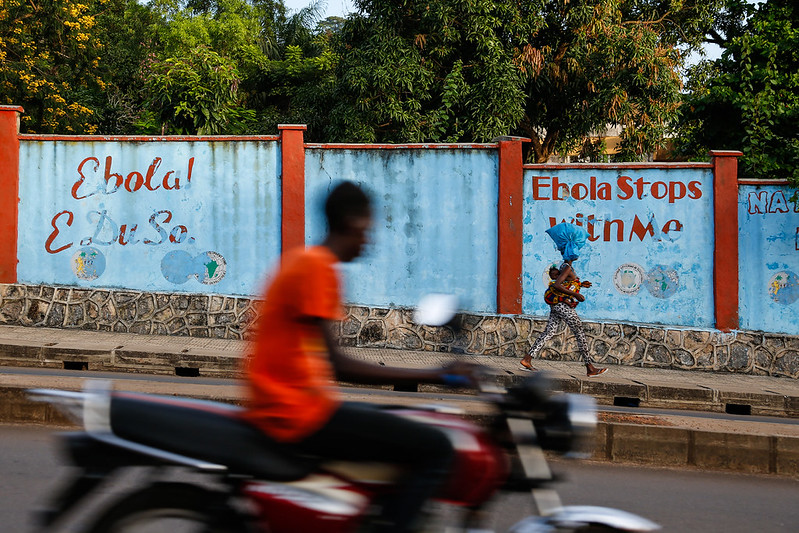
Having access to timely, reliable and actionable evidence is therefore essential. Rapid evidence and discourse summaries play a critical role in helping governments, humanitarian agencies, public health responders and development partners navigate uncertainty and respond effectively to evolving outbreaks.
Though evidence alone is not enough. During emergencies, decision-makers are often overwhelmed by information arriving from multiple sources: research studies, surveillance reports, operational updates, media coverage, social media discussions and expert networks. The challenge is not simply finding information but identifying what is relevant, reliable and actionable. Here is where K4DD’s Evidence and Discourse Summaries come in.
Learning From Covid-19 Summaries
The value of rapid evidence synthesis was demonstrated during the Covid-19 pandemic through the Knowledge for Development (K4D) COVID-19 Health Evidence Summaries. Produced by Liverpool School of Tropical Medicine (LSTM) in partnership with the Institute of Development Studies (IDS) and other K4D consortium members, the summaries provided regular updates on emerging evidence and discourse relevant to policymakers and practitioners working in an unprecedented global crisis.
Rather than simply collecting research, the summaries synthesised emerging evidence, expert commentary, operational insights and policy discussions. This broader perspective helped decision-makers track developments during a rapidly evolving crisis and identify important uncertainties before the traditional publication.
“Evidence Summaries are brilliant because they… tell us what the key things are this week and we can interpret them in the context of FCDO.” – FCDO Advisor
Feedback from users captured in this impact story showed that the summaries provided value to government departments, informing policy and programming responses, and to the wider development, humanitarian, and public health communities by facilitating access to timely and relevant evidence during the pandemic. Although commissioned to meet specific evidence needs within the UK’s Foreign, Commonwealth & Development Office (FCDO), their public availability helped support evidence-informed decision-making beyond their original audience.
Supporting Ebola Response Through Timely Intelligence
The same principles apply to the recent 2026 Ebola virus outbreak in the Democratic Republic of Congo and Uganda. While scientific research remains essential, effective outbreak response depends on understanding much more than the epidemiology of a disease. Responders need evidence on diagnostics, therapeutics, surveillance, community engagement, risk communication and continuity of essential health services. They also need insight into the social, behavioural, political and security dynamics that influence transmission and shape the success of interventions.
By synthesising evidence and discourse across these areas of research, summaries such as the K4DD Ebola Evidence and Discourse Summaries provide a more complete picture of the outbreak environment and support more informed and coordinated decision-making.
These summaries should also be forward-looking rather than just retrospective. While lessons from previous outbreaks remain valuable, responders often need answers to more immediate questions: What is changing? What evidence is emerging? What risks should we be monitoring? What developments may affect operational decisions over the coming weeks? By focusing on emerging evidence and evolving discourse, K4DD’s summaries can help decision-makers anticipate challenges rather than simply reflect on them.
Navigating Uncertainty: The Balance Between Speed and Confidence
One of the greatest challenges during any outbreak is balancing the need for rapid action with the reality that evidence is often incomplete. Rapid evidence summaries help decision-makers understand what is known, what is emerging and what remains uncertain at a given point in time. Their role is not to provide definitive answers to every question but to offer the best available understanding of a rapidly evolving situation.
Early findings may come from field observations, operational intelligence, expert networks or preprint studies that have not yet undergone peer review. These sources can provide invaluable early warning signals and help identify emerging trends before they appear in the formal literature. However, they also require transparency about their limitations and the level of confidence that can be placed in them.
For this reason, evidence and discourse summaries should clearly identify the source and maturity of information, distinguishing between peer-reviewed research, preprints, operational reports and expert analysis. This allows readers to understand both the value and limitations of the evidence being presented.
Changing decisions when new evidence emerges should not be viewed as a weakness. In emergency response, adaptation is a strength. The willingness to revise guidance, adjust priorities and modify interventions as understanding improves is a hallmark of evidence-informed decision-making.
Creating a Public Good
Drawing on expertise from K4DD, LSTM, IDS, the Multi-Hazard Research Network, and wider partner organisations, these summaries can provide a trusted mechanism for sharing intelligence, research and operational insights across the response community.
Although developed to meet FCDO evidence needs, experience from Covid-19 shows that openly published summaries support governments, humanitarian organisations, researchers and policy advisers across the wider response community. Making rapid evidence and discourse summaries publicly available therefore serves both an operational and a public-good function. It strengthens transparency, supports collaboration, reduces duplication of effort and helps ensure that emerging knowledge reaches those who can use it most effectively.
In fast-moving emergencies such as the outbreak of Ebola, information can save lives but only if it reaches decision-makers in a form they can use. Rapid evidence and discourse summaries provide one way to bridge emerging knowledge and operational action, helping ensure that decisions are informed not only by what was known yesterday, but by what is being discovered today and what may shape the response tomorrow.